You feel fine. No pain, no symptoms, no reason to book a doctor’s appointment. So why bother with preventive care?
That thinking is exactly why millions of people miss out on one of the most powerful tools in modern healthcare. Preventive care isn’t just for the sick — it’s designed for the healthy. And the benefits go far beyond what most people realize. From catching silent diseases early to saving thousands in medical bills, routine checkups, screenings, and vaccinations are doing quiet, life-saving work that most of us take for granted — or skip altogether.
Let’s break down the preventive care benefits that consistently fly under the radar, and why getting proactive about your health is one of the smartest decisions you can make.
What Is Preventive Care?
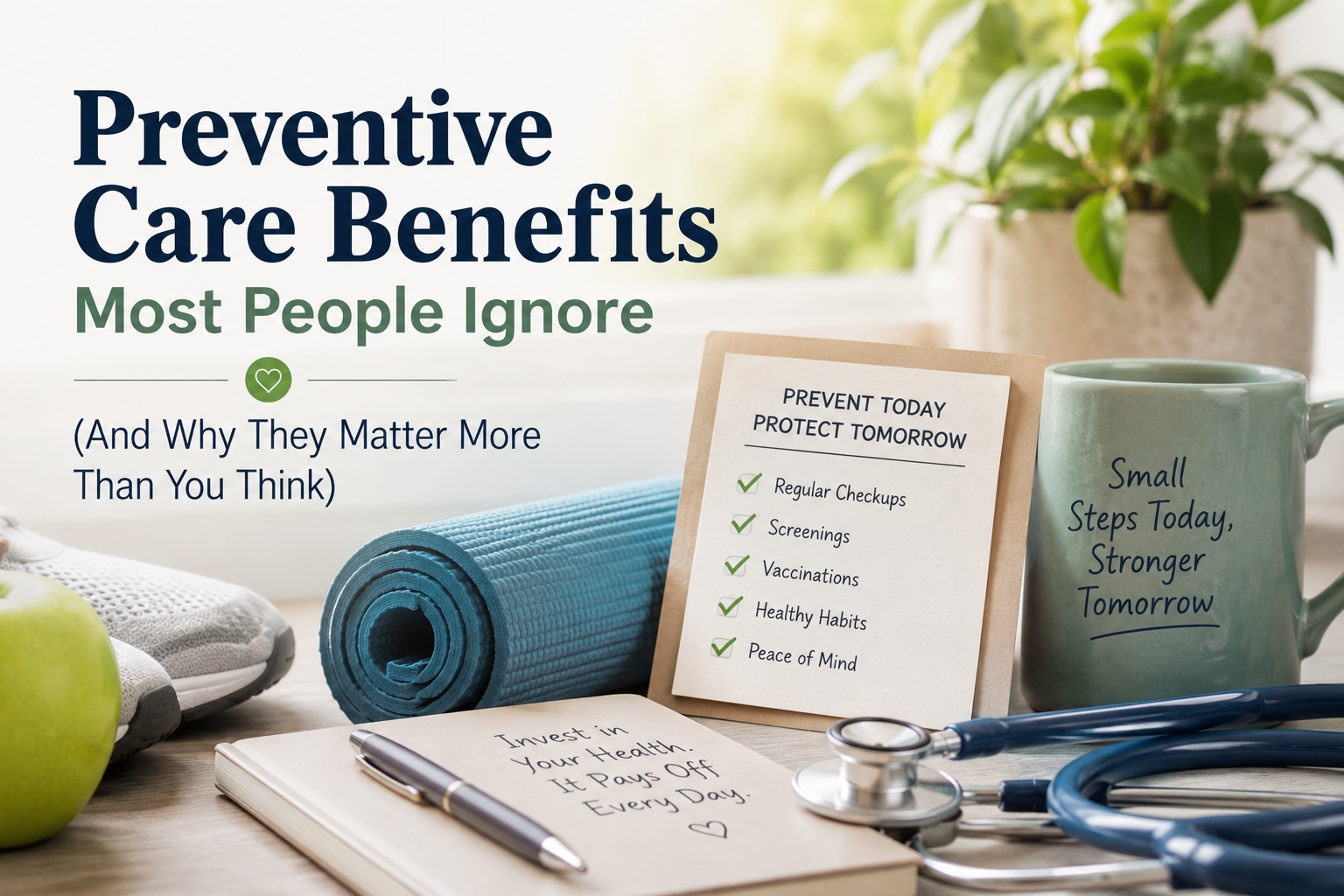
Preventive care refers to a range of health services — including annual physical exams, vaccinations, health screenings, and lifestyle counseling — taken before symptoms appear. The goal is to detect risk factors early, prevent disease onset, and reduce the severity of health conditions if they do develop.
Common preventive care services include:
- Annual wellness visits and physical exams
- Blood pressure, cholesterol, and blood sugar screenings
- Cancer screenings (mammograms, colonoscopies, Pap tests, PSA tests)
- Immunizations and flu shots
- Mental health screenings
- Dental and vision checkups
- BMI and obesity assessments
Despite being covered at no extra cost under most health insurance plans, many people simply don’t use these services.
7 Preventive Care Benefits Most People Overlook
1. Early Detection of Silent Conditions
Many serious health conditions — high blood pressure, Type 2 diabetes, high cholesterol — have no obvious symptoms in their early stages. A routine blood panel or blood pressure check can identify these issues years before they cause heart attacks, strokes, or organ damage.
The same is true for cancer. Most cancers are far more treatable when caught early. According to evidence from multiple health agencies, 30 to 50% of cancers could be prevented or effectively treated if people got recommended screenings on time. A colonoscopy, for example, doesn’t just detect colon cancer — it allows providers to remove precancerous polyps before they turn malignant.
Key takeaway: You don’t need to feel sick to have a serious condition developing. Early detection is what turns a potential crisis into a manageable health event.
2. Significant Long-Term Cost Savings
This is perhaps the most ignored financial reality in healthcare. People skip annual checkups to save time or avoid a copay — not realizing that a $0–$30 wellness visit could prevent a $30,000 hospital stay down the line.
Here’s a simple cost comparison:
| Preventive Service | Typical Cost (Insured) | Treatment Cost If Missed |
|---|---|---|
| Colonoscopy (routine) | $0 (covered) | $50,000+ for colon cancer treatment |
| Blood pressure screening | $0 (covered) | $20,000+ for stroke rehabilitation |
| Mammogram | $0 (covered) | $100,000+ for late-stage breast cancer |
| Flu vaccine | $0 (covered) | $15,000+ for flu-related hospitalization |
| Diabetes screening | $0 (covered) | $10,000+/year managing Type 2 diabetes |
The math is not subtle. Preventive care is almost always far cheaper than the alternative.
3. Mental Health Screenings Are Part of Preventive Care (And Almost Always Skipped)
Most people think of preventive care as physical — blood draws, cancer checks, heart health. But mental health screenings are an equally important part of routine preventive care that the vast majority of people never ask about or receive.
Your primary care provider (PCP) can screen for depression and anxiety using brief standardized questionnaires. They can also conduct cognitive assessments to screen for early signs of dementia or cognitive decline — something that becomes increasingly critical after age 60.
Since there’s currently no cure for Alzheimer’s disease, early identification allows for interventions that slow progression and improve quality of life. These conversations can happen at your annual wellness visit, but only if you bring it up or your doctor is thorough enough to raise it.
4. Vaccines Aren’t Just for Children
Immunizations are one of the most underused preventive tools among adults. Most people get their childhood vaccines and assume they’re covered for life — but that’s not how immunity works.
Adults need:
- Annual flu vaccines — especially important for people over 65, pregnant women, and those with chronic conditions
- Tdap booster — every 10 years for tetanus, diphtheria, and pertussis protection
- Shingles vaccine (Shingrix) — recommended for adults 50 and older
- Pneumococcal vaccine — for adults 65+ to prevent pneumonia
- COVID-19 boosters — as recommended based on current guidelines
- Hepatitis B vaccine — if not previously vaccinated
Many of these are covered at no cost under most health plans, yet uptake remains alarmingly low — particularly among middle-aged adults who feel they’re in the “healthy zone” and don’t think vaccines apply to them.
5. Establishing a Health Baseline
One underappreciated function of annual checkups is the creation of a personal health baseline. When you visit your doctor every year, your results — blood sugar, blood pressure, cholesterol, kidney function — are tracked over time.
This longitudinal record is invaluable. A single cholesterol reading of 210 might seem acceptable in isolation. But if it’s crept up from 180 over three years with no change in diet or lifestyle, your doctor now has evidence of a meaningful trend — one that needs to be addressed proactively.
Without regular checkups, there is no baseline. Each test becomes a disconnected data point rather than part of a complete picture of your health trajectory.
6. Preventive Care Improves Workplace Productivity and Quality of Life
This benefit rarely shows up in individual health conversations, but it’s well-documented at the population level. Untreated chronic conditions are a leading cause of missed workdays, reduced productivity, and burnout. Health problems result in approximately 69 million workers reporting missed workdays annually in the United States alone.
At the individual level, staying on top of your health means fewer sick days, more energy, better cognitive function, and an overall improvement in day-to-day quality of life. Managing chronic disease risk factors early — before they become full-blown conditions — keeps you functioning at your best.
7. Insurance Covers More Than You Think — at $0 Cost to You
One of the most common reasons people skip preventive care is the assumption that it’s expensive. In reality, most health insurance plans — including those through employers, the Health Insurance Marketplace, Medicare, and Medicaid — are required by law to cover a broad range of preventive services at zero out-of-pocket cost to the insured.
This includes:
- Annual physicals and wellness visits
- Cholesterol and blood sugar testing (when part of a routine wellness exam)
- Cancer screenings based on age and gender guidelines
- Vaccinations and immunizations
- Mental health screenings
The catch? You typically need to use an in-network provider for full coverage. Always verify with your plan’s provider directory before booking — but don’t let uncertainty stop you from making the call.
Common Preventive Screenings by Age Group
| Age Group | Recommended Screenings |
|---|---|
| 18–39 | Blood pressure, cholesterol (if at risk), STI screenings, depression screening, dental, vision |
| 40–49 | All above + mammogram (women), diabetes screening, colorectal cancer screening (from 45) |
| 50–64 | All above + colonoscopy, lung cancer screening (smokers), shingles vaccine, bone density (women) |
| 65+ | All above + cognitive decline screening, pneumococcal vaccine, fall risk assessment |
Why Do So Many People Still Skip Preventive Care?
Despite the clear benefits, barriers remain widespread. The most common reasons people cite include:
- “I feel fine” — The most dangerous justification. Many conditions are asymptomatic until advanced.
- Cost concerns — Many people don’t realize how much is covered for free under their insurance.
- Lack of a primary care provider — Especially prevalent in rural or underserved areas.
- Time constraints — Annual visits can feel like a low priority when life gets busy.
- Lack of awareness — Many people simply don’t know which screenings they need, or when.
The solution to most of these barriers is a single annual wellness visit with a primary care provider who can walk you through a personalized screening schedule.
Conclusion: Don’t Wait Until You’re Sick
Preventive care isn’t about being paranoid about your health — it’s about being smart. The biggest wins in modern medicine don’t happen in the emergency room. They happen years earlier, in a routine appointment where a doctor notices a slightly elevated A1C, a borderline blood pressure reading, or a polyp that hasn’t yet become dangerous.
The screenings are largely free. The time investment is minimal. The upside — potentially decades of healthier life — is enormous.
Book that annual checkup. Ask your doctor which screenings you’re due for. Use the preventive benefits you’ve already paid for. Your future self will be grateful you didn’t wait.
Frequently Asked Questions (FAQs)
What counts as preventive care?
Preventive care includes annual physicals, vaccinations, routine cancer screenings, blood pressure and cholesterol checks, and mental health screenings — all done before symptoms appear.
Is preventive care really free with insurance?
Most ACA-compliant insurance plans cover recommended preventive services at no cost to you, as long as you use an in-network provider.
How often should I get a preventive checkup?
Most adults benefit from an annual wellness visit. Some screenings (like colonoscopies) are only needed every 5–10 years depending on results and risk factors.
What’s the difference between preventive and diagnostic care?
Preventive care is routine, scheduled, and done before any known issue exists. Diagnostic care is triggered by symptoms or abnormal findings and may carry out-of-pocket costs.
Can preventive care help with mental health?
Yes. Depression and anxiety screenings are part of standard preventive care, and many plans also cover initial cognitive assessments for memory or thinking concerns.
What preventive screenings are most important for men?
Key screenings for men include blood pressure, cholesterol, blood sugar, colorectal cancer (from age 45), and PSA tests for prostate cancer based on age and risk.
What preventive screenings are most important for women?
Women should prioritize Pap smears, mammograms (typically from age 40–45), bone density scans, and blood pressure and cholesterol checks, along with all standard screenings.
At what age should preventive care start?
Preventive care starts at birth (well-child visits) and continues throughout life. Adults of all ages benefit from annual checkups and age-appropriate screenings.
About the Author