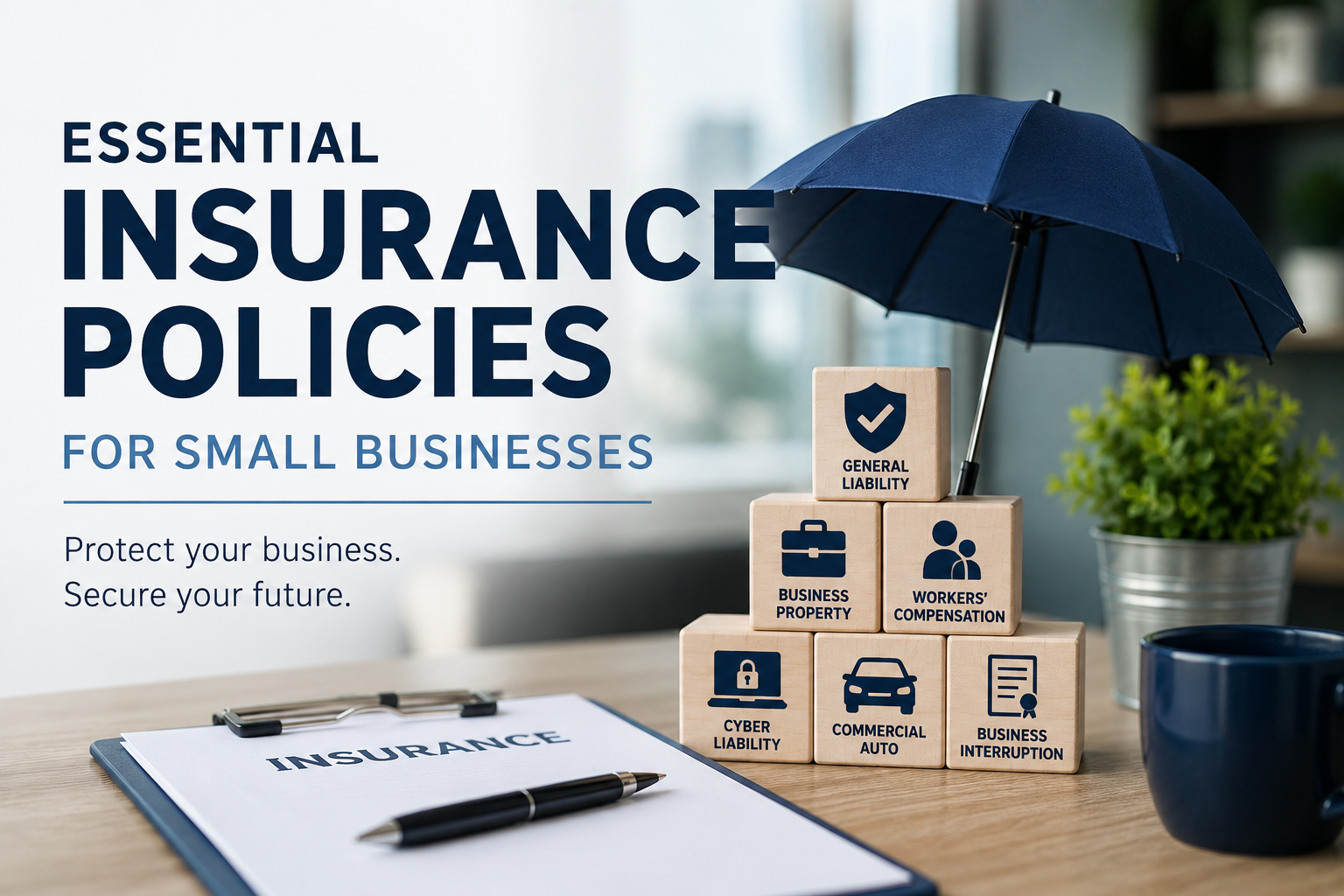
Running a small business comes with real rewards — and real risks. A single lawsuit, a burst pipe, or a data breach can wipe out years of hard work overnight. That’s why having the right insurance isn’t a luxury; it’s a business survival strategy. This guide breaks down the essential insurance policies every small business owner should understand, compare, and act on.
Why Small Business Insurance Matters
Many entrepreneurs delay buying insurance because it feels like an added expense. But consider this: one slip-and-fall lawsuit can cost tens of thousands in legal fees alone — even if you win. The right coverage transforms unpredictable financial disasters into manageable, predictable costs.
Beyond protection, insurance also builds credibility. Lenders often require proof of coverage before approving financing. Clients and vendors may ask for certificates before signing contracts. Insurance signals that your business is serious, stable, and trustworthy.
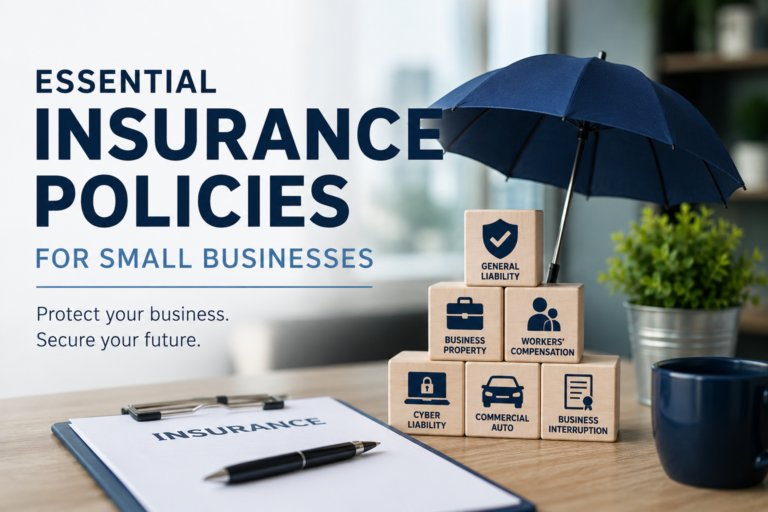
8 Essential Insurance Policies Every Small Business Needs
1. General Liability Insurance
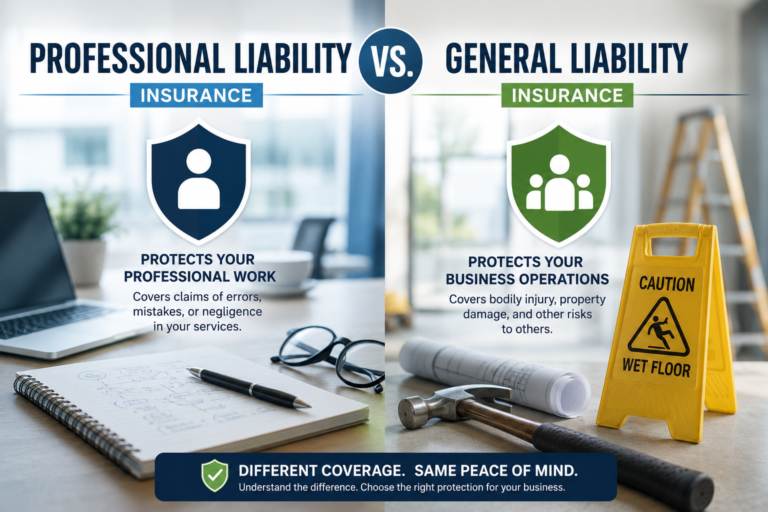
What it is: General liability (GL) insurance is the foundation of any small business insurance plan. It covers third-party claims involving bodily injury, property damage, and personal or advertising injury.
Example: A customer slips on a wet floor in your shop and breaks their wrist. Without GL insurance, you’re paying legal fees and medical bills out of pocket.
Who needs it: Almost every business — from freelancers to retail stores to contractors. Many landlords and clients require it before you can sign a lease or begin a project.
Average monthly cost: ~$42–$123
2. Business Owner’s Policy (BOP)
What it is: A Business Owner’s Policy bundles three core coverages into one affordable package:
- General liability — third-party injury and property damage
- Commercial property insurance — protects your building, equipment, and inventory
- Business interruption insurance — replaces lost income if a covered event forces a temporary shutdown
Why it’s smart: Buying these separately costs significantly more. A BOP is the most cost-effective starting point for most small businesses.
Average monthly cost: ~$57–$221
Pro Tip: If you’re a sole proprietor or home-based business, a BOP is often the single best policy to start with.
3. Professional Liability Insurance (Errors & Omissions)
What it is: Also called E&O insurance, this covers claims that your professional advice or services caused a client financial harm — even when you did nothing wrong.
Who needs it most:
- Consultants and marketing agencies
- Accountants and financial advisors
- Healthcare providers
- IT and software developers
- Lawyers and real estate professionals
Example: A marketing consultant delivers a campaign that underperforms. The client sues for lost revenue. Professional liability covers your legal defense and any resulting settlement.
Average monthly cost: ~$50–$100
4. Workers’ Compensation Insurance
What it is: Workers’ comp covers medical expenses and lost wages for employees injured or made ill on the job. It also protects employers from being sued by injured workers.
Is it required? Yes — in most U.S. states, workers’ comp is legally mandatory once you hire your first employee. Penalties for non-compliance can be severe, including fines and personal liability.
Average monthly cost: ~$45–$99 per employee (varies by industry risk level)
5. Commercial Property Insurance
What it is: This policy protects your physical business assets — the building you own or lease, office equipment, furniture, signage, and inventory — against events like fire, theft, vandalism, and certain weather events.
Important: Standard commercial property insurance does NOT cover floods or earthquakes. If your business is in a high-risk area, you’ll need separate policies for those perils.
Best for: Retail stores, restaurants, warehouses, offices, and any business with significant physical assets.
6. Commercial Auto Insurance
What it is: Your personal auto insurance won’t cover accidents that happen while driving for business purposes. Commercial auto insurance fills that gap, covering liability, collision, and comprehensive damage for vehicles used in business operations.
Who needs it:
- Delivery businesses and couriers
- Contractors who drive to job sites
- Any business with a company-owned vehicle
Average monthly cost: ~$152 nationally
7. Cyber Liability Insurance
What it is: Cyber insurance covers your business in the event of a data breach, ransomware attack, or other cyber incident. It typically covers:
- Customer notification costs
- Credit monitoring services
- Legal fees and regulatory fines
- Data recovery and system restoration
- Business interruption from cyber events
Why it’s urgent: Small businesses are frequent targets for cybercriminals precisely because their defenses tend to be weaker. The average data breach costs small businesses over $100,000 — and many never recover.
Average monthly cost: ~$57–$145
8. Business Interruption Insurance
What it is: If a covered event (fire, storm, vandalism) forces you to temporarily close, business interruption insurance replaces your lost income and covers ongoing operating expenses like rent, payroll, and utilities during the downtime.
Note: This coverage is often included in a BOP, but can also be purchased separately.
Quick Comparison: Essential Small Business Insurance at a Glance
| Policy | What It Covers | Required? | Avg. Monthly Cost |
|---|---|---|---|
| General Liability | Third-party injuries, property damage | Often required by landlords/clients | $42–$123 |
| Business Owner’s Policy (BOP) | GL + property + business interruption | No (but recommended) | $57–$221 |
| Professional Liability (E&O) | Client claims of errors or negligence | No (industry-dependent) | $50–$100 |
| Workers’ Compensation | Employee injuries and lost wages | Yes, in most states | $45–$99/employee |
| Commercial Property | Building, equipment, inventory | No (required by lenders) | Varies |
| Commercial Auto | Business vehicle accidents | Yes, if you own company vehicles | ~$152 |
| Cyber Liability | Data breaches, ransomware | No (strongly recommended) | $57–$145 |
| Business Interruption | Lost income during closures | No (often in BOP) | Included in BOP |
How to Choose the Right Coverage for Your Business
Not every business needs every policy. Your coverage decisions should be guided by:
- Industry and risk profile — A roofing contractor faces different risks than a graphic designer.
- State and local legal requirements — Workers’ comp and commercial auto rules vary by state.
- Client and lender requirements — Many contracts specify minimum coverage limits.
- Number of employees — More employees means more exposure and often more required coverage.
- Physical assets — Businesses with owned property, vehicles, or expensive equipment need broader coverage.
Money-Saving Tips for Small Business Insurance
- Bundle policies — A BOP is almost always cheaper than buying GL and property separately. Adding workers’ comp to the same insurer can yield up to 10% discounts.
- Compare multiple quotes — Rates vary significantly between providers. Use an independent broker to shop around.
- Raise your deductible — A higher deductible lowers your premium, but make sure you can cover it out of pocket if needed.
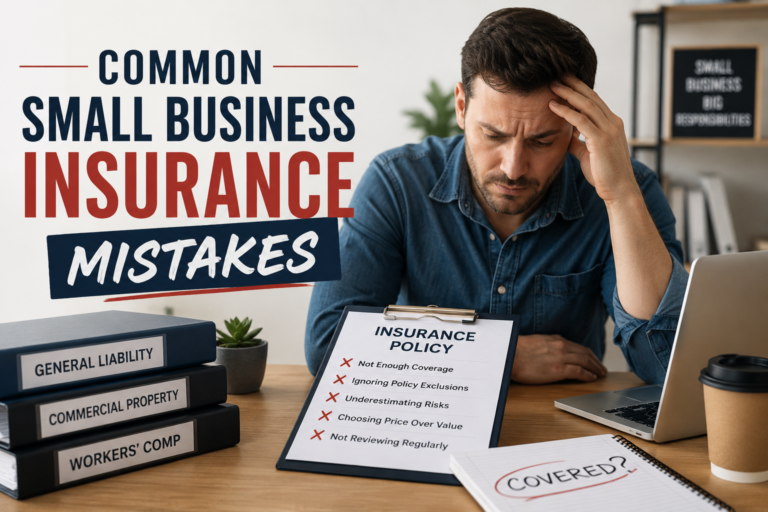
- Review annually — As your business grows, your coverage needs change. An outdated policy can leave dangerous gaps.
- Maintain a clean claims history — Fewer claims generally mean lower premiums over time.
Conclusion
Protecting your small business with the right insurance isn’t just smart — it’s essential. Start with the basics: general liability or a BOP. Add workers’ comp if you have employees. Layer in professional liability, cyber coverage, and commercial auto as your business model demands.
Think of insurance not as an expense, but as the financial foundation that lets you take risks, grow, and serve clients with confidence. The cost of the right policy is almost always far less than the cost of going without it.
Frequently Asked Questions (FAQs)
What is the most important insurance for a small business?
General liability insurance is the single most essential policy — it protects against the most common and costly claims, including customer injuries and property damage.
Is business insurance tax deductible?
Yes. In most cases, business insurance premiums are fully tax-deductible as an ordinary business expense under IRS guidelines.
What does a Business Owner’s Policy (BOP) include?
A BOP typically bundles general liability, commercial property insurance, and business interruption insurance into one discounted package.
Do I need business insurance if I work from home?
Yes. Your homeowner’s or renter’s insurance does not cover business-related claims. Even home-based businesses need at least general liability and possibly professional liability coverage.
How much does small business insurance cost per month?
Most small businesses pay between $42 and $221 per month depending on the type of coverage. A basic general liability policy averages around $42–$123/month, while a BOP runs $57–$221/month.
Is cyber insurance worth it for small businesses?
Absolutely. Small businesses are prime targets for cyberattacks, and the average breach costs over $100,000. Cyber insurance is one of the fastest-growing and most recommended policies for modern businesses of any size.
When should I get workers’ compensation insurance?
The moment you hire your first employee — and in most states, before that. Most states legally require workers’ comp coverage from day one of employment.
Can I bundle different insurance policies together?
Yes, and you should. Bundling saves money. A BOP is the most common bundle. Many insurers offer additional discounts when you add workers’ comp or commercial auto to an existing policy.
Note: Insurance requirements and costs vary by state, industry, and business size. Always consult a licensed insurance broker or agent to find the coverage that’s right for your specific situation.
About the Author