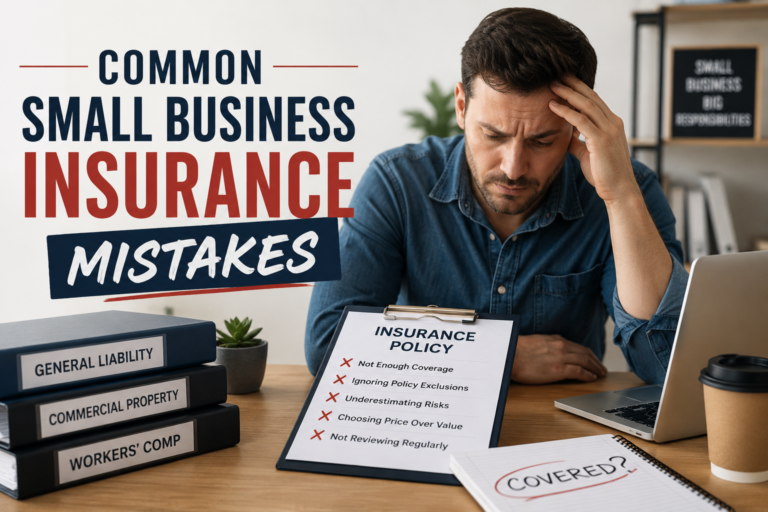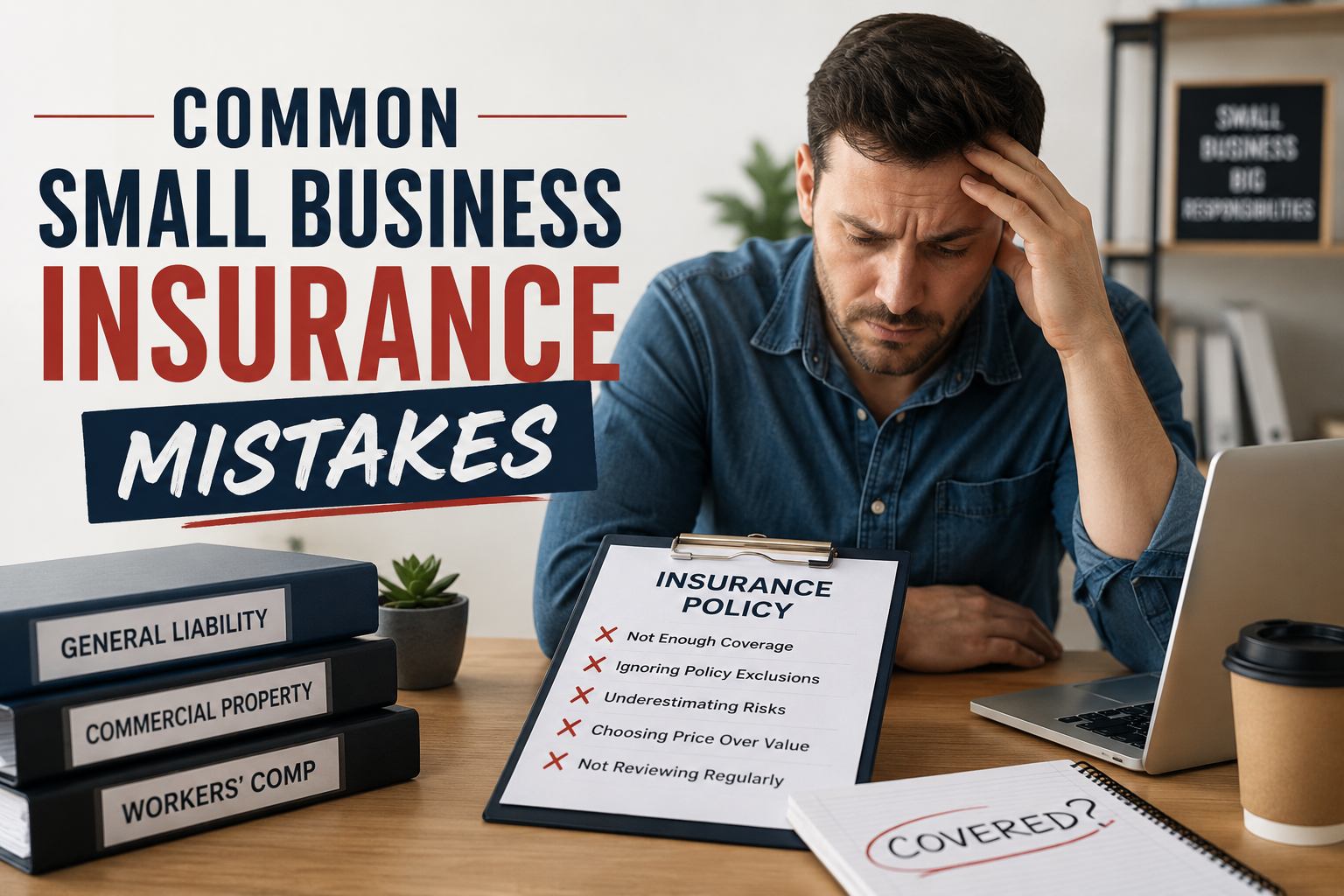
Running a small business is one of the most rewarding things you can do — but it also comes with real financial risk. One of the smartest moves you can make as a business owner is securing the right insurance coverage. Yet thousands of entrepreneurs every year fall into the same traps: buying the wrong policies, underestimating their needs, or skipping coverage altogether to cut costs.
The hard truth? Most insurance mistakes only become visible when disaster strikes — and by then, it’s too late to fix them. This guide breaks down the most common small business insurance mistakes, explains why they happen, and shows you exactly how to avoid them before they become costly.
Why Small Business Insurance Matters More Than You Think
Insurance isn’t just a legal checkbox. It’s the financial safety net that keeps your business standing after a lawsuit, a fire, a data breach, or an employee injury. Without adequate coverage, a single incident can wipe out years of hard work and personal savings.
According to industry data, a significant percentage of small businesses are either uninsured or severely underinsured — not because owners don’t care, but because navigating commercial insurance is genuinely confusing. The good news: with the right knowledge, these mistakes are entirely preventable.
The 9 Most Common Small Business Insurance Mistakes
Mistake #1: Assuming One Policy Covers Everything
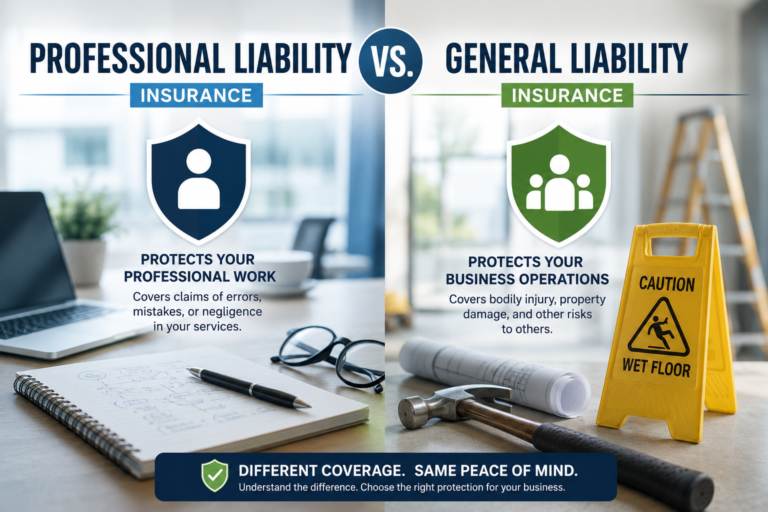
One of the most frequent errors is assuming that a basic general liability policy acts as a blanket shield for all business risks. It doesn’t. General liability covers third-party bodily injury and property damage — but it typically excludes professional errors, employee injuries, cyber incidents, and equipment damage.
What to do instead: Work with a licensed commercial insurance broker to conduct a full risk assessment. Identify every exposure your business faces, then build a coverage stack that addresses each one.
Mistake #2: Underestimating Coverage Limits
Having some insurance is better than none — but having inadequate coverage limits can be just as damaging. If a lawsuit results in damages that exceed your policy’s limit, you’re personally responsible for the difference.
Example: A general liability policy with a $300,000 limit sounds reasonable until a slip-and-fall lawsuit results in a $750,000 judgment. The remaining $450,000 comes directly out of your pocket.
What to do instead: Review your coverage limits annually. Factor in the value of your assets, your industry’s liability exposure, and the realistic cost of a major claim in your sector.
Mistake #3: Insuring Property for Less Than Its Replacement Value
Many small business owners insure their equipment and property based on its original purchase price rather than its current replacement cost. After inflation and market changes, what you paid three years ago may not come close to what it costs to replace today.
What to do instead: Choose replacement cost coverage over actual cash value (ACV) coverage. ACV accounts for depreciation, which means a payout that may not cover a full replacement. Replacement cost coverage pays out what it actually costs to buy a comparable item at today’s prices.
Mistake #4: Skipping Industry-Specific Coverage
Every business has unique risk exposures. A restaurant faces risks a software consulting firm never will — and vice versa. Yet many small businesses default to a one-size-fits-all policy that leaves critical gaps in protection.
| Business Type | Coverage Often Overlooked |
|---|---|
| Restaurant / Food Service | Food spoilage, liquor liability, food contamination |
| Technology / SaaS | Cyber liability, errors & omissions, IP infringement |
| Construction / Contractors | Builder’s risk, tools & equipment, contractor’s pollution |
| Healthcare / Wellness | Medical malpractice, professional liability |
| Retail | Product liability, commercial crime, business interruption |
What to do instead: Research the coverage requirements specific to your industry. Consult with an agent who specializes in your business type, not just a generalist broker.
Mistake #5: Ignoring Cyber Liability Insurance
Cyberattacks aren’t just a Fortune 500 problem. Small businesses are increasingly targeted because they often have weaker cybersecurity infrastructure. A single data breach can expose customer payment information, trigger regulatory penalties, and result in costly lawsuits.
Standard business owner’s policies (BOPs) and general liability policies do not cover cyber incidents. Without a dedicated cyber liability policy, you’re absorbing all those costs yourself.
What a cyber liability policy typically covers:
- Data breach notification costs
- Legal defense and settlements
- Business interruption losses from a cyberattack
- Ransomware payments and recovery
- Regulatory fines and penalties
What to do instead: If your business stores any customer data — names, emails, payment details — cyber liability insurance is no longer optional. Even a modest policy can prevent a five- or six-figure out-of-pocket loss.
Mistake #6: Failing to Update Coverage as the Business Grows
A policy that fit your business two years ago may leave you dangerously exposed today. Hiring new employees, purchasing equipment, adding service lines, signing commercial leases, or expanding to new locations all change your risk profile significantly.
Many business owners set their insurance and forget it — sometimes for years — while their operations evolve well beyond their original policy terms.
What to do instead: Schedule an annual insurance review with your broker. Also trigger a mid-year review anytime you experience a significant business change, such as:
- Hiring your first employee (or fifth)
- Purchasing new machinery or technology
- Adding a new product or service line
- Moving to or opening a new location
- Signing a major client contract
Mistake #7: Not Reading the Policy Exclusions
Policy exclusions are the fine print that defines what your coverage will not pay for. Many small business owners are shocked when a claim is denied — not because of fraud, but because they never read what their policy actually excluded.
Common exclusions that catch businesses off guard include:
- Flood and earthquake damage (typically excluded from standard property coverage)
- Intentional acts
- Contractual liability
- Employment-related claims (unless you have EPLI coverage)
- Cyber incidents (excluded from most general liability policies)
What to do instead: Before signing any policy, ask your broker to walk you through the exclusions section. If a gap exists that represents a real risk for your business, purchase a rider or separate policy to fill it.
Mistake #8: Choosing Price Over Coverage
It’s tempting to go with the cheapest quote when budgets are tight. But a low-premium policy often comes with high deductibles, narrow coverage terms, and low payout limits. The “savings” evaporate the moment you file a claim.
What to do instead: Compare policies based on total value, not just monthly cost. Look at:
- Coverage limits vs. your realistic risk exposure
- Deductible amounts
- Exclusions
- Insurer financial strength ratings (AM Best is a reliable source)
- Claims handling reputation
Mistake #9: Skipping Workers’ Compensation
If you have employees, workers’ compensation insurance isn’t just wise — in most states, it’s legally required. Skipping it exposes you to state fines, lawsuits from injured workers, and full out-of-pocket liability for medical bills and lost wages.
Even if you classify some workers as independent contractors, that status may not hold up under legal scrutiny. Misclassifying employees as contractors is a serious liability risk.
What to do instead: Check your state’s workers’ compensation requirements and comply immediately if you haven’t already. If you use contractors, verify their own insurance coverage and get certificates of insurance before they begin work.
Quick Reference: Common Mistakes at a Glance
| Mistake | Risk Level | Easy Fix |
|---|---|---|
| Assuming one policy covers all risks | High | Conduct a full risk assessment |
| Low coverage limits | High | Review and increase limits annually |
| Insuring at purchase price, not replacement cost | Medium | Switch to replacement cost coverage |
| Missing industry-specific policies | High | Work with a specialist broker |
| No cyber liability coverage | High | Add a dedicated cyber policy |
| Not updating coverage after growth | Medium | Schedule annual reviews |
| Ignoring exclusions | High | Read and understand your policy |
| Choosing cheapest policy | Medium | Compare value, not just price |
| Skipping workers’ compensation | Very High | Comply with state law immediately |
Conclusion
Small business insurance mistakes are common, but they’re not inevitable. The businesses that weather lawsuits, disasters, and data breaches are the ones that treated their insurance program as a living, evolving asset — not a one-time purchase.
The best step you can take right now is to schedule a comprehensive coverage review with an experienced commercial insurance professional. Identify the gaps before they become catastrophes. Your business took years to build. A few hours of insurance due diligence is a small price to protect everything you’ve worked for.
Frequently Asked Questions (FAQs)
What is the most common small business insurance mistake?
The most common mistake is assuming a general liability policy covers all business risks, when it typically excludes professional errors, cyber incidents, and employee injuries.
Do I really need cyber liability insurance as a small business?
Yes. If you store any customer data — even just email addresses — a data breach can cost tens of thousands of dollars in legal fees, notification costs, and recovery expenses that standard policies won’t cover.
How often should I review my business insurance policies?
At minimum, review your coverage annually. Also review immediately after major changes like hiring employees, buying equipment, expanding locations, or launching new services.
What happens if I don’t have workers’ compensation insurance?
In most states, operating without required workers’ comp coverage is illegal and can result in heavy fines, business closure, and full personal liability for employee injuries.
Is a Business Owner’s Policy (BOP) enough for most small businesses?
A BOP combines general liability and commercial property coverage, making it a strong starting point — but most businesses also need additional policies like professional liability, cyber coverage, or workers’ compensation depending on their industry.
What does “replacement cost” vs. “actual cash value” mean?
Replacement cost pays what it costs to replace an item at today’s prices. Actual cash value deducts depreciation, meaning you receive less — often significantly less — than what you need to replace the item.
Can I get business insurance as a sole proprietor or home-based business?
Yes. Even sole proprietors and home-based businesses face real liability risks. Your homeowner’s policy will not cover business-related losses, so separate business coverage is essential.
About the Author