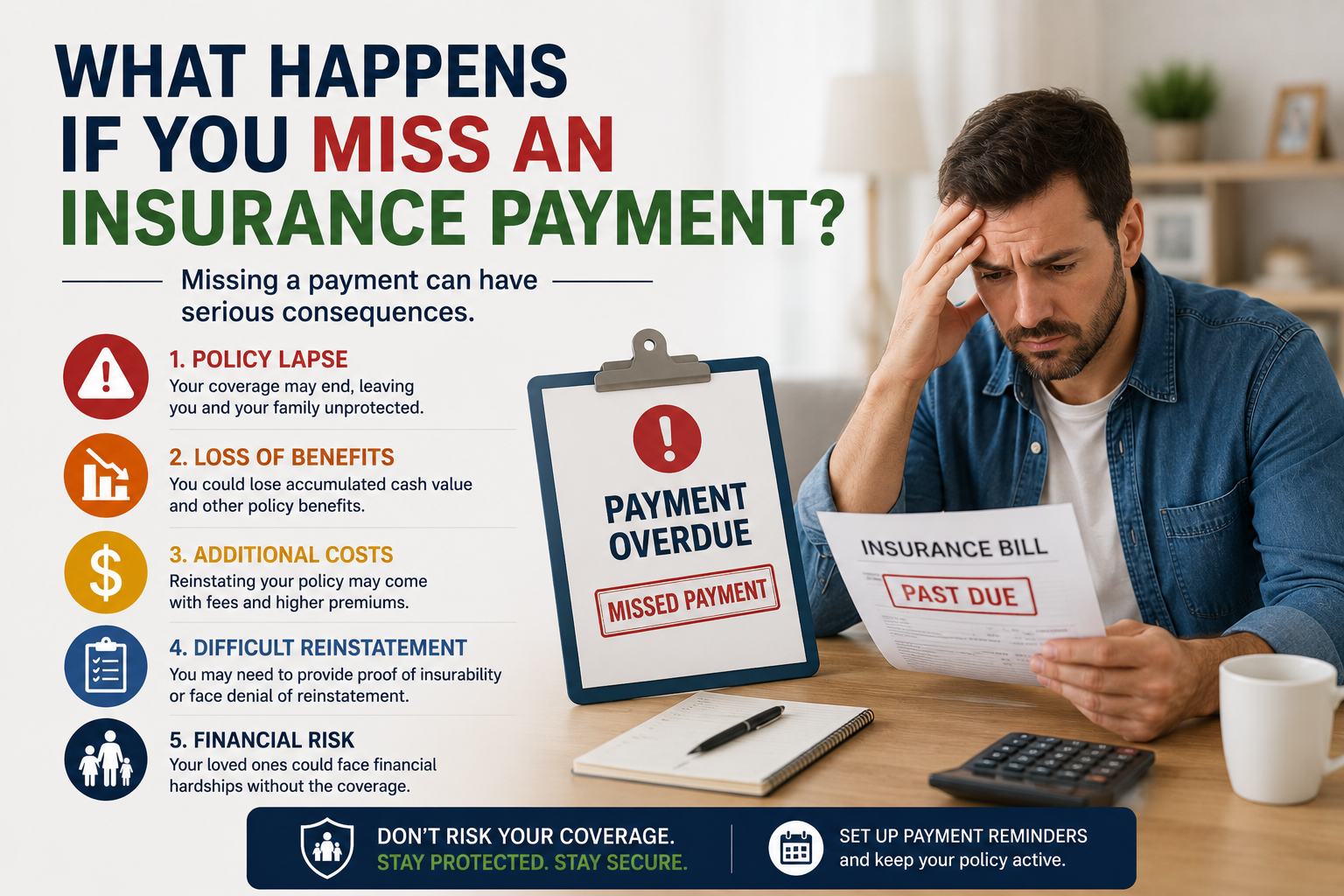
Missing an insurance payment can feel like a small slip — but the consequences can snowball quickly if you don’t act fast. Whether it’s car insurance, life insurance, or health insurance, a late or missed premium payment can lead to a grace period, a policy lapse, higher rates, and even legal trouble. This guide breaks down exactly what happens, step by step, and what you can do to fix it.
What Happens Immediately After a Missed Payment?
Most people assume their coverage vanishes the moment they miss a payment. That’s usually not the case — but it’s not harmless either.
When you miss a due date, your insurer typically:
- Sends a notice (via mail, email, or phone) within a few days
- Places your policy into a grace period
- Continues your coverage temporarily while you catch up
The key word here is temporarily. How long you have depends on your insurer, your state, and the type of insurance policy you hold.
Understanding the Grace Period
A grace period is the window of time after your missed payment during which your policy remains active. Think of it as a short buffer your insurer gives you before pulling the plug on coverage.
How Long Is the Grace Period?
Grace periods vary depending on the type of insurance:
| Insurance Type | Typical Grace Period |
|---|---|
| Auto Insurance | 10 to 30 days |
| Life Insurance | 30 to 31 days (often up to 90 days) |
| Health Insurance | 30 days (Marketplace plans: up to 90 days) |
| Homeowners Insurance | 10 to 20 days |
Important: Not all insurers are required to offer a grace period. Some states mandate minimum grace periods by law (for example, California requires at least 10 days for auto policies), while others leave it entirely up to the company.
During the grace period, your coverage usually remains in force — but late fees may apply. If you pay within this window, you avoid a lapse and get back on track.
What Is a Policy Lapse?
A policy lapse happens when your grace period ends and you still haven’t made your payment. At this point, your coverage officially ends. This is different from a late payment — a lapse means there’s a real gap in your insurance history.
Consequences of a Lapsed Insurance Policy
Once your policy lapses, the fallout can be significant:
1. You’re Driving or Living Unprotected Any accident, medical emergency, or property damage during a lapse period is entirely your financial responsibility. There’s no insurer to foot the bill.
2. Fines and Legal Penalties In most U.S. states, driving without active auto insurance is illegal. If you’re caught, you could face:
- Fines from the DMV
- License suspension
- Vehicle impoundment
- Mandatory SR-22 filing (which labels you a high-risk driver)
3. Higher Premiums Going Forward Insurers view a coverage lapse as a red flag. When you try to buy or reinstate a policy after a lapse, you’re likely to be charged higher rates. Some carriers may refuse to cover you altogether.
4. Loss of Continuous Coverage Discounts Many insurers reward loyal, uninterrupted policyholders with discounts. A lapse wipes out that loyalty record.
5. Policy Cancellation and Difficulty Getting New Coverage Your insurer may not only cancel your current policy — they may also refuse to renew it. Finding a new provider after a cancellation for non-payment can be harder and more expensive.
How to Reinstate a Lapsed Policy
If your policy has lapsed, all is not necessarily lost. Here’s how reinstatement typically works:
Steps to Reinstate Your Insurance
- Contact your insurer immediately — The sooner you reach out, the better your chances.
- Pay all missed premiums — You’ll need to pay the overdue amount plus any applicable late fees.
- Pay reinstatement fees — These usually range between $50 and $150, depending on the company.
- Sign a “no-loss” statement (for some insurers) — This confirms you had no claims or accidents during the lapse period.
- Undergo underwriting (for life insurance) — If your life insurance lapsed, you may need to prove insurability again, which could involve a health questionnaire or medical exam.
Pro Tip: Most insurers allow reinstatement within a defined window — often 2 to 5 years for life insurance. The longer you wait, the more hoops you’ll have to jump through.
If your insurer won’t reinstate your policy, you’ll need to shop for new coverage. Look for companies that specialize in high-risk or lapsed-coverage situations.
Does a Missed Payment Affect Your Credit Score?
In most cases, a single missed insurance payment does not directly affect your credit score, because insurers don’t typically report payment activity to credit bureaus the way lenders do. However, if your account goes to a collections agency after non-payment, that collection entry can damage your credit significantly.
Missed Payment by Insurance Type: What to Expect
Auto Insurance
Missing a car insurance payment is one of the riskiest lapses because driving is a daily necessity and most states require active coverage by law. Even a one-day lapse can carry legal consequences if you’re in an accident or pulled over.
Life Insurance
A lapsed life insurance policy puts your beneficiaries at risk. If you pass away during a lapse period, your family cannot claim the death benefit. For whole life or permanent policies, the insurer may use your policy’s cash value to cover premiums temporarily — but this only works if you’ve built up enough value over time.
Health Insurance
For Marketplace (ACA) plans, missing a premium payment begins a 30-day grace period. If you’re receiving subsidies, the grace period can extend to 90 days — but your claims may be held pending during the last 60 days of that window.
Homeowners Insurance
A lapse in homeowners insurance can violate the terms of your mortgage agreement. Your lender may then force-place insurance on your property — which is often more expensive and offers less coverage than your original policy.
How to Avoid Missing an Insurance Payment
Prevention is far easier than reinstatement. Here are practical steps to protect your coverage:
- Set up autopay — Automatic payments eliminate the risk of forgetting a due date.
- Choose a payment schedule that fits your budget — Monthly, quarterly, or annual options may be available.
- Set calendar reminders — A simple phone alert a few days before the due date can save you from a lapse.
- Update your payment information — Expired cards or changed bank accounts are common reasons payments fail.
- Contact your insurer if you’re struggling — Many insurers offer hardship options, payment extensions, or adjusted plans if you reach out before missing a payment.
Frequently Asked Questions (FAQs)
Will my insurance cancel immediately if I miss one payment?
No. Most insurers provide a grace period of 10 to 30 days before cancelling your policy, giving you time to make the payment without losing coverage.
Can I get my policy reinstated after a lapse?
Yes, in most cases — but you’ll need to pay any missed premiums plus reinstatement fees, and possibly meet additional requirements depending on the policy type.
Does a missed insurance payment hurt my credit?
A missed payment alone typically doesn’t affect your credit, but if it’s sent to collections, that can have a serious negative impact on your credit score.
How long does a lapse stay on my insurance record?
A lapse can stay on your insurance history for 3 to 5 years, depending on the insurer and state, and may result in higher premiums during that period.
What is an SR-22 and when do I need one?
An SR-22 is a certificate of financial responsibility required by some states after a coverage lapse or traffic violation. It proves you carry active insurance and typically results in higher premiums.
Can I drive during the grace period?
Technically your coverage is still active during the grace period, so driving is legal — but it’s best to pay immediately rather than rely on this window.
What happens if I miss a life insurance payment and then pass away?
If you’re still within the grace period, your death benefit is usually still payable. If the policy has officially lapsed, your beneficiaries may not be able to claim the benefit.
Conclusion
Missing an insurance payment is a stressful situation, but it’s rarely the end of the road — especially if you act quickly. Most insurers offer a grace period that gives you a short window to catch up without losing coverage. The real danger lies in ignoring the problem: a policy lapse can leave you legally exposed, financially vulnerable, and facing higher premiums for years.
If you’ve missed a payment, call your insurer today. Explain your situation, ask about your grace period, and get your coverage back in place before life throws something unexpected your way.
Disclaimer: Insurance regulations vary by state and provider. Always review your specific policy documents or consult a licensed insurance professional for advice tailored to your situation.
About the Author